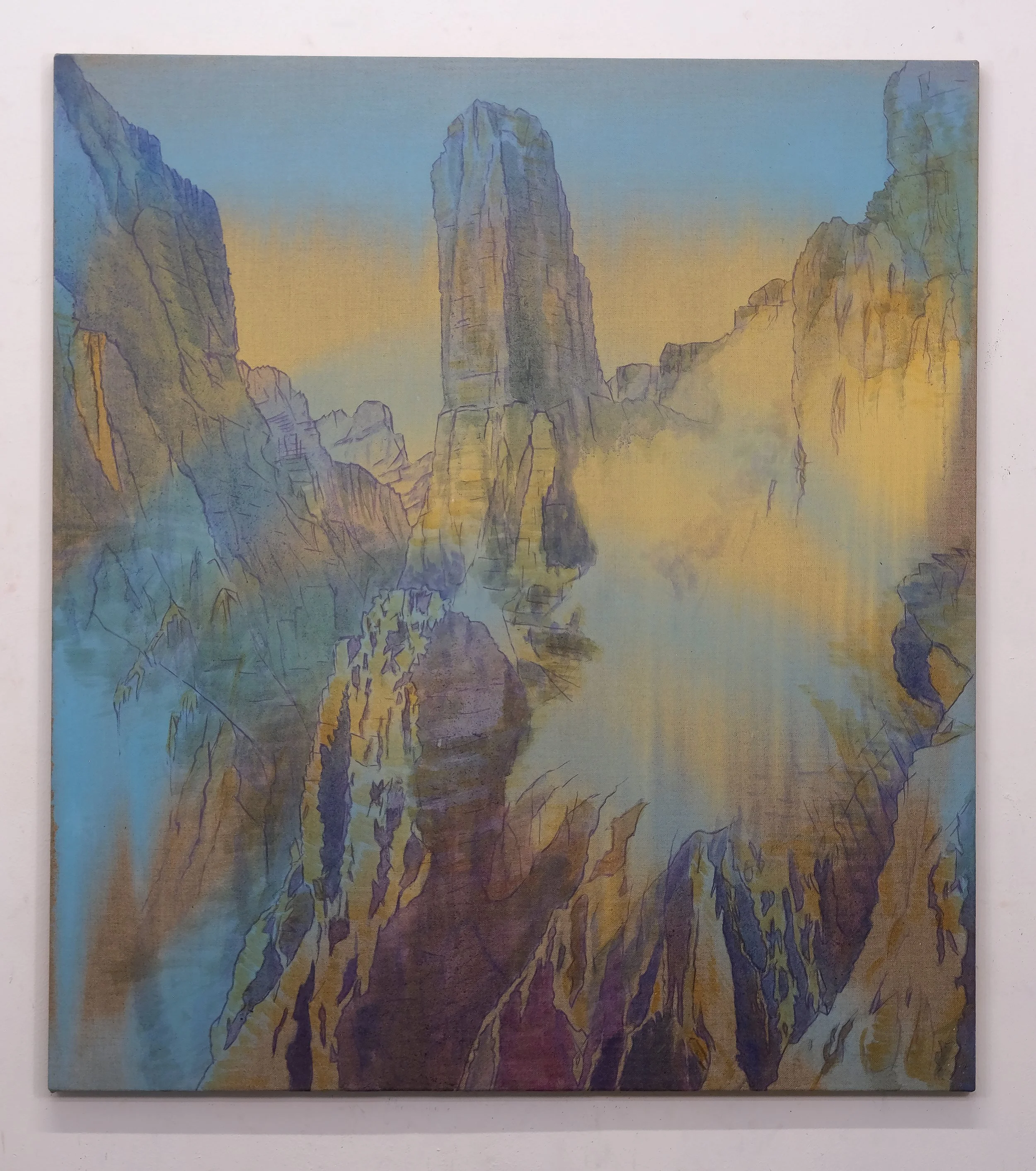
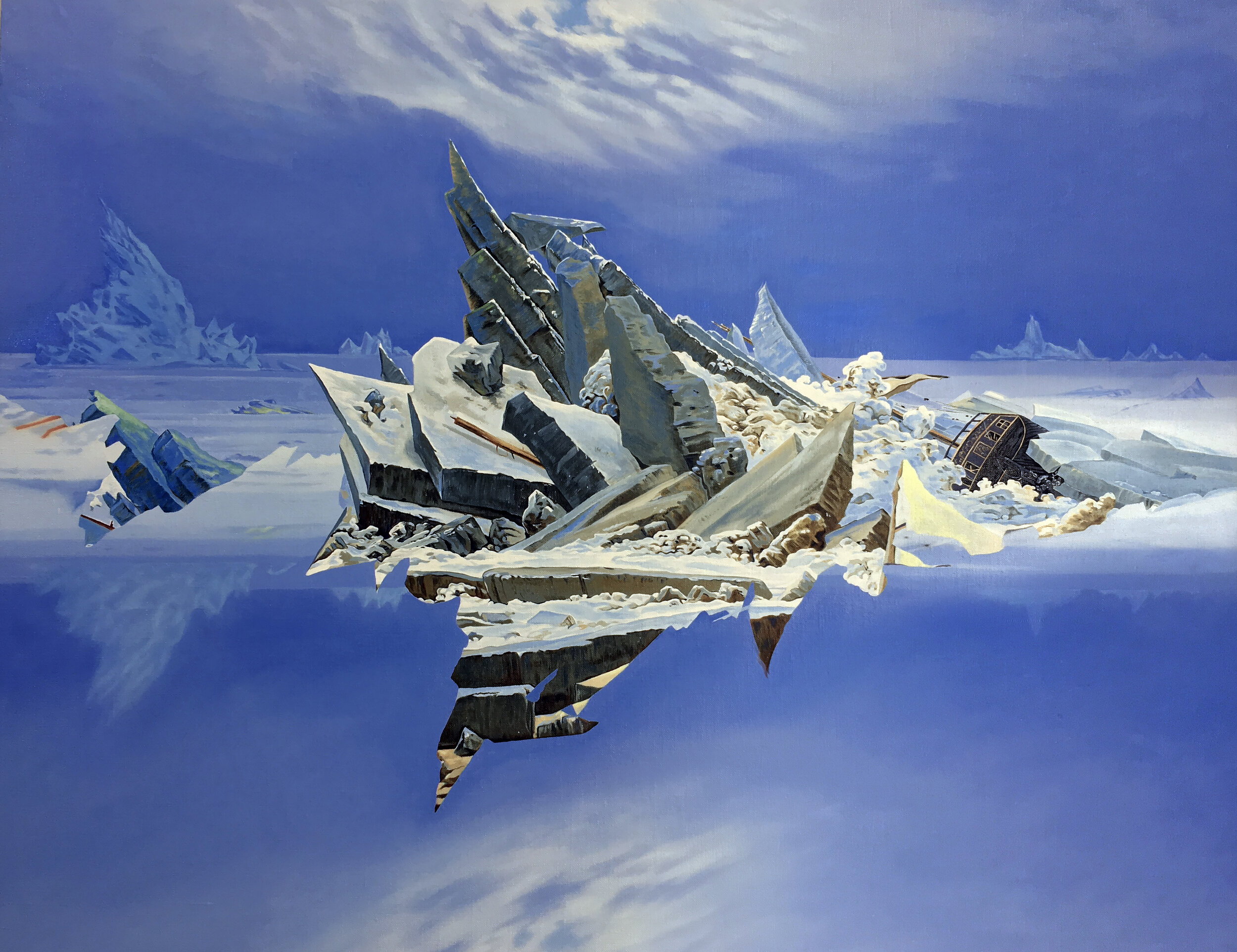
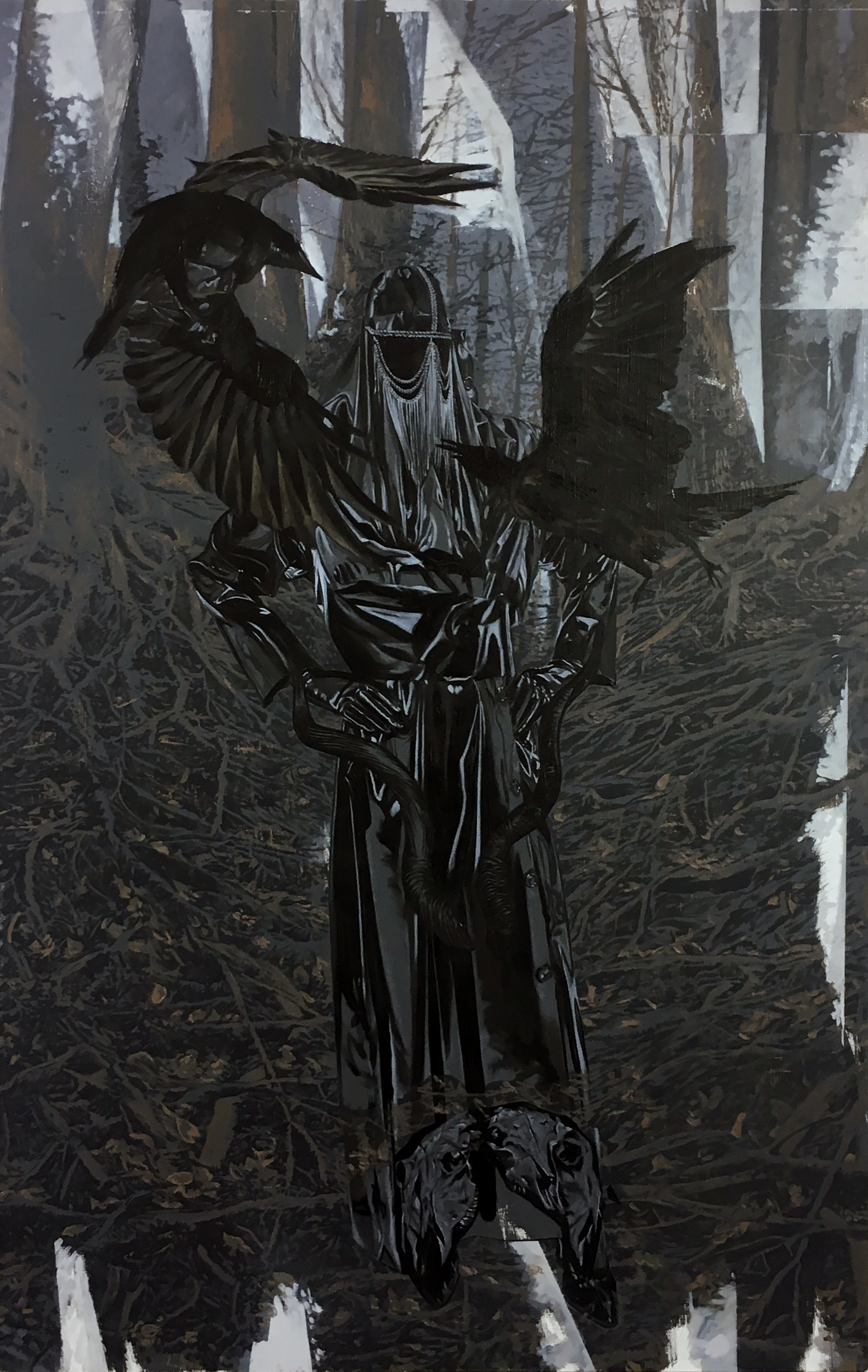
The Shadow of Wisdom - Sophia's Fall and the Conception of Yaldabaoth
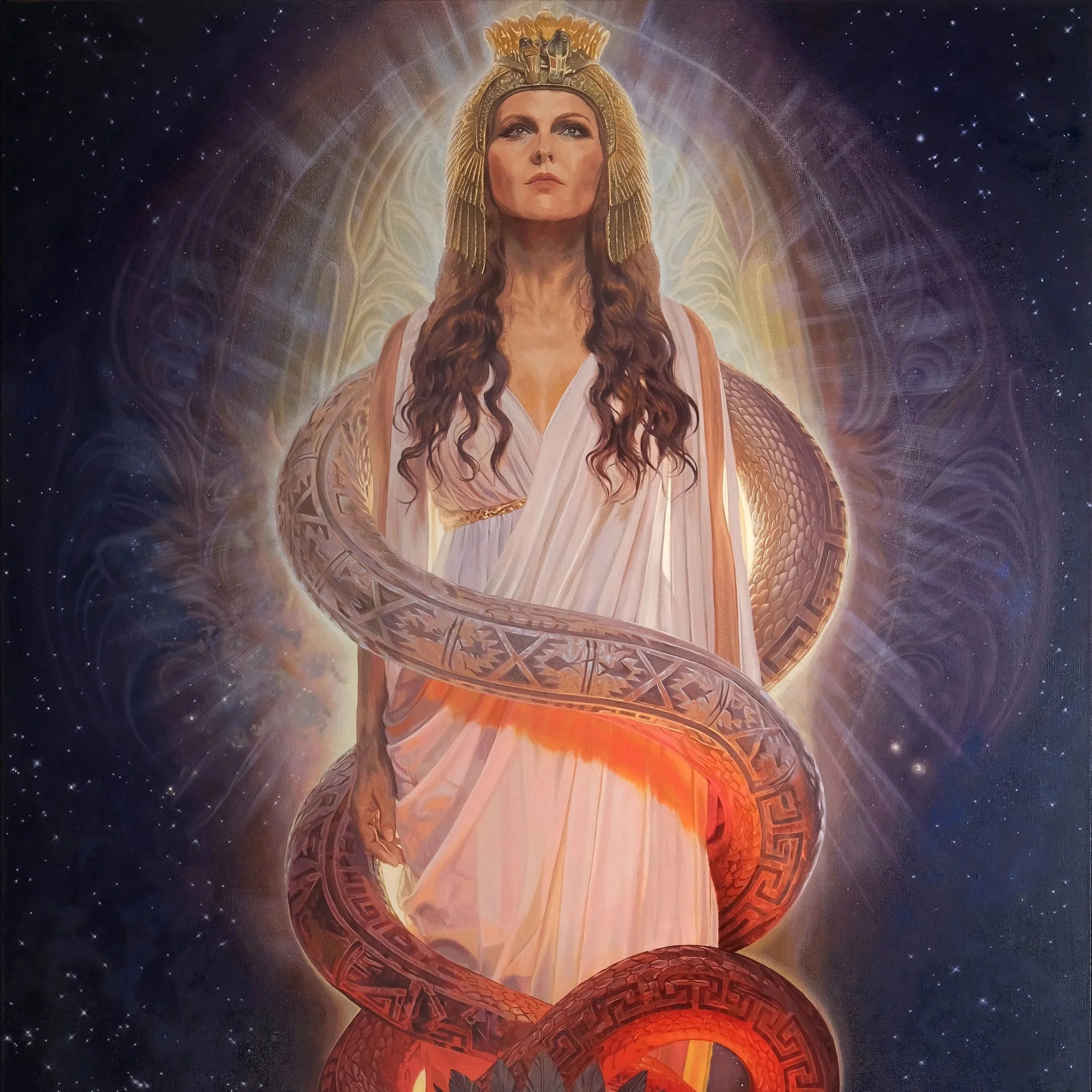
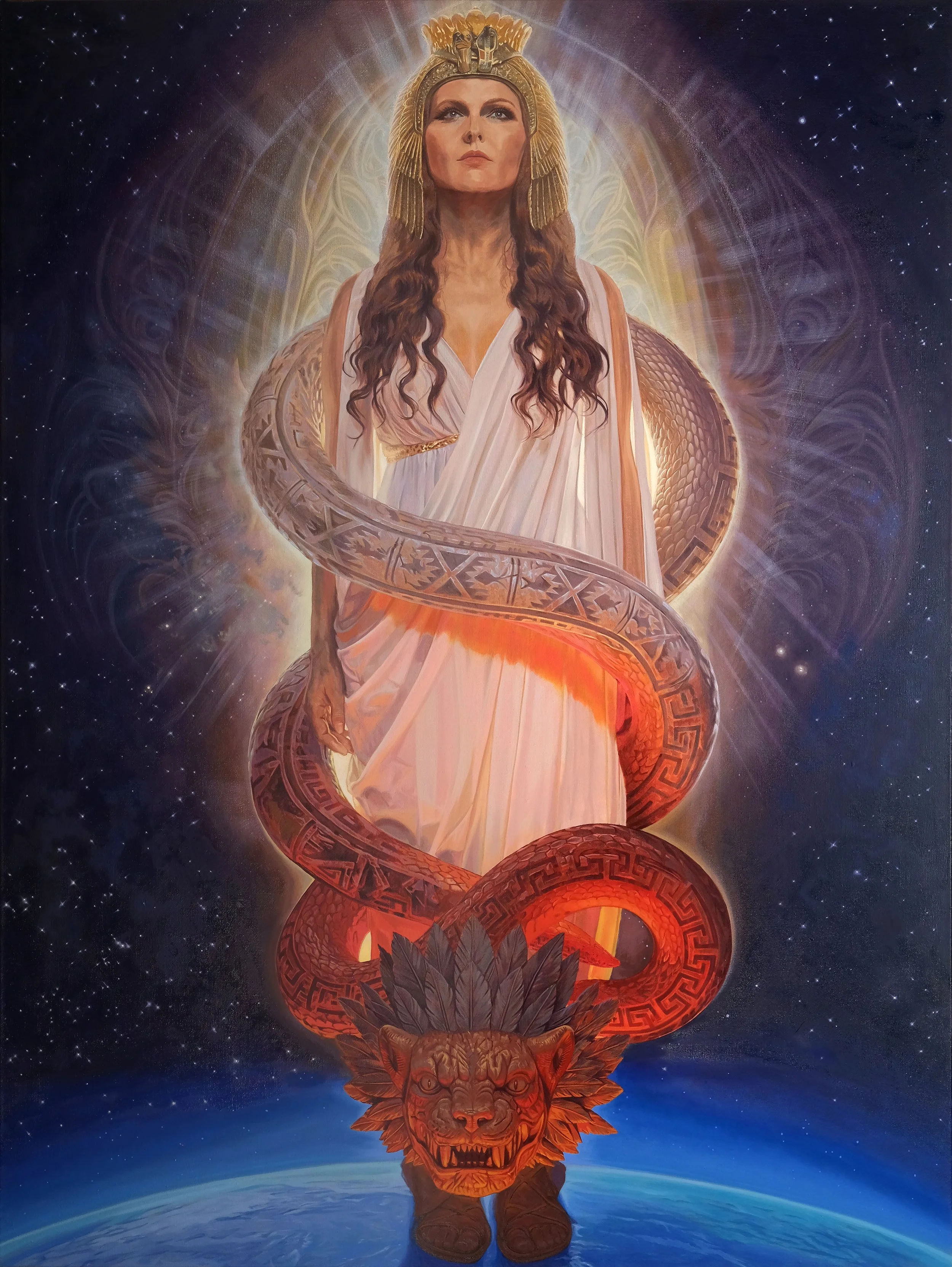
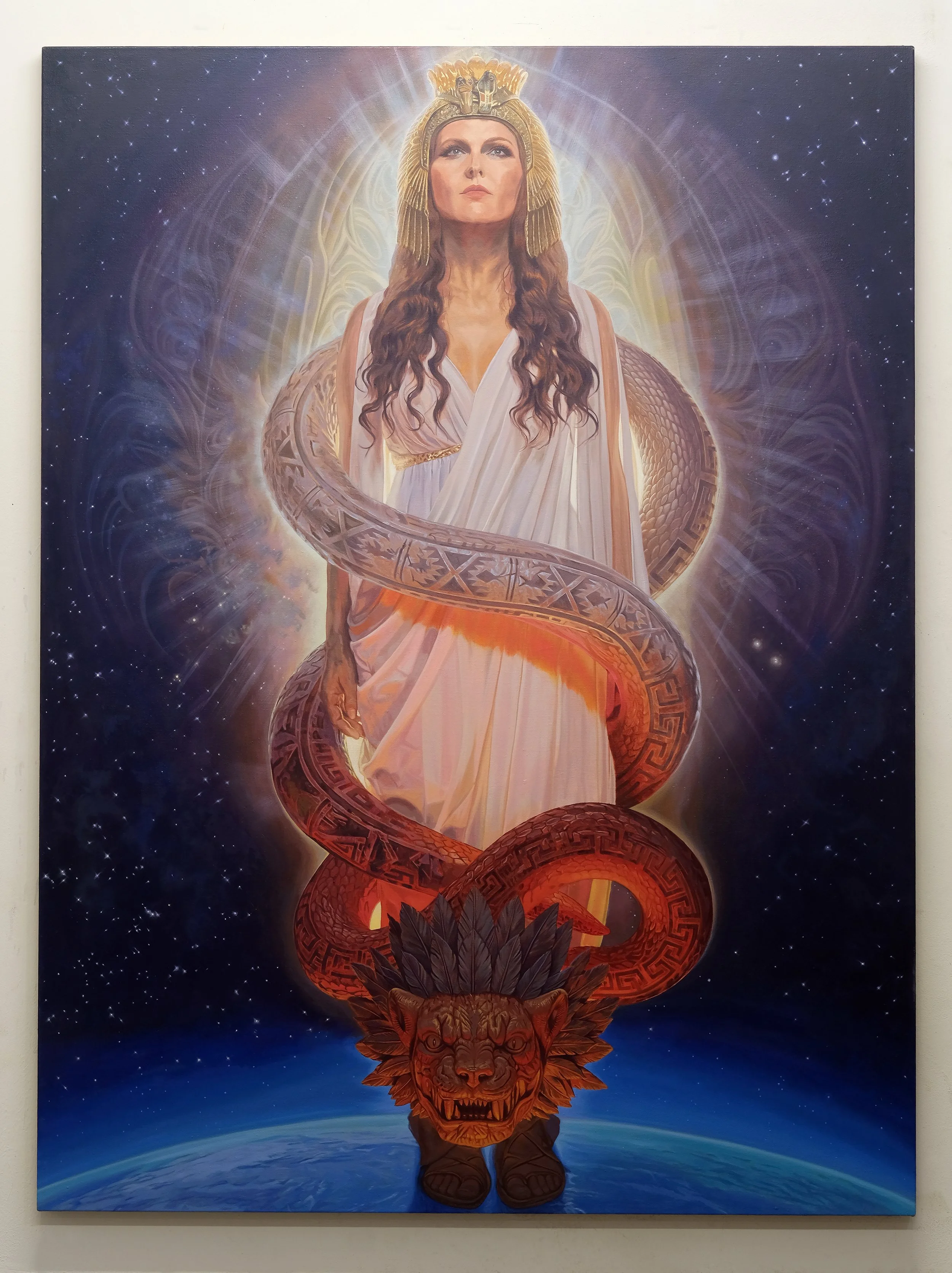
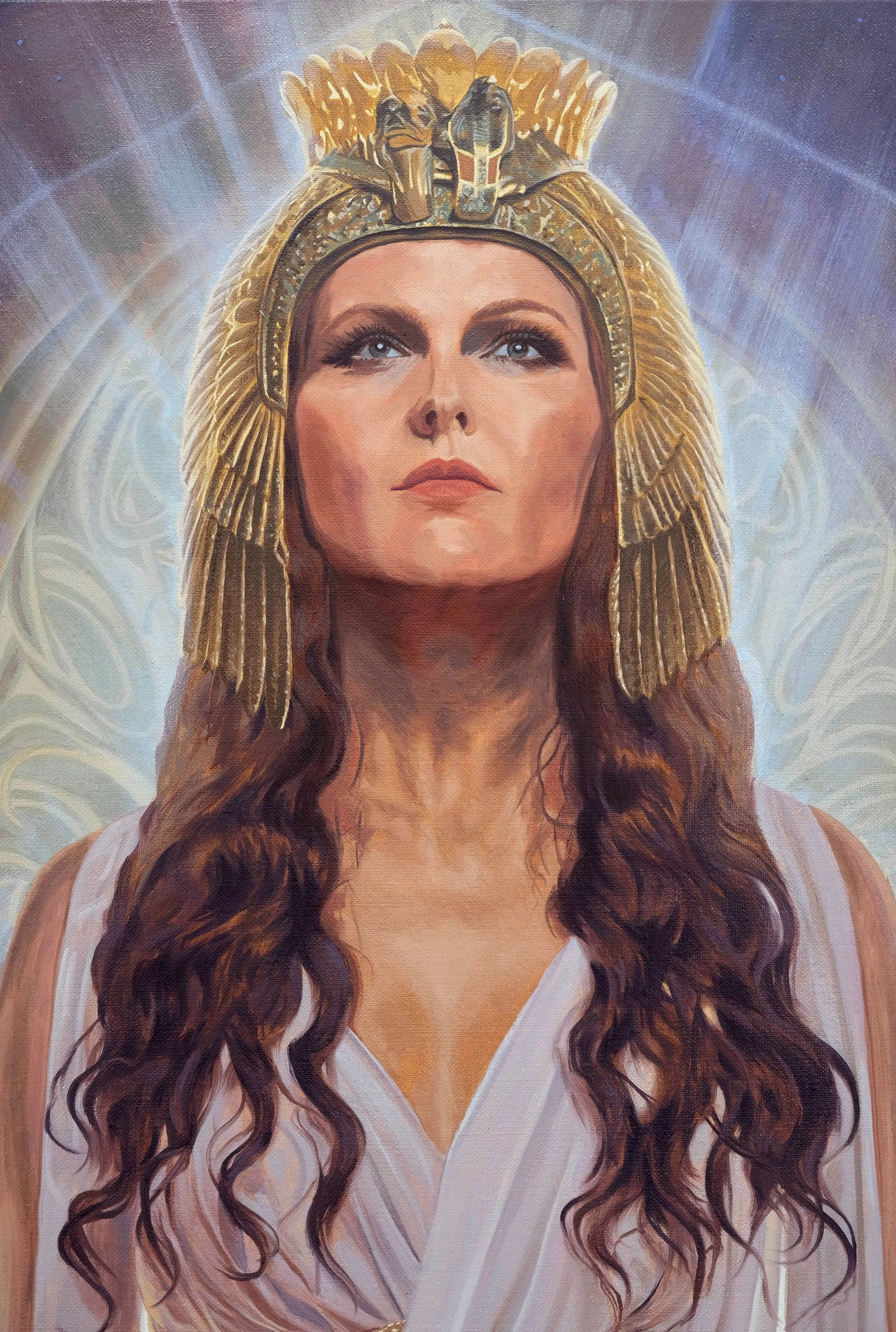
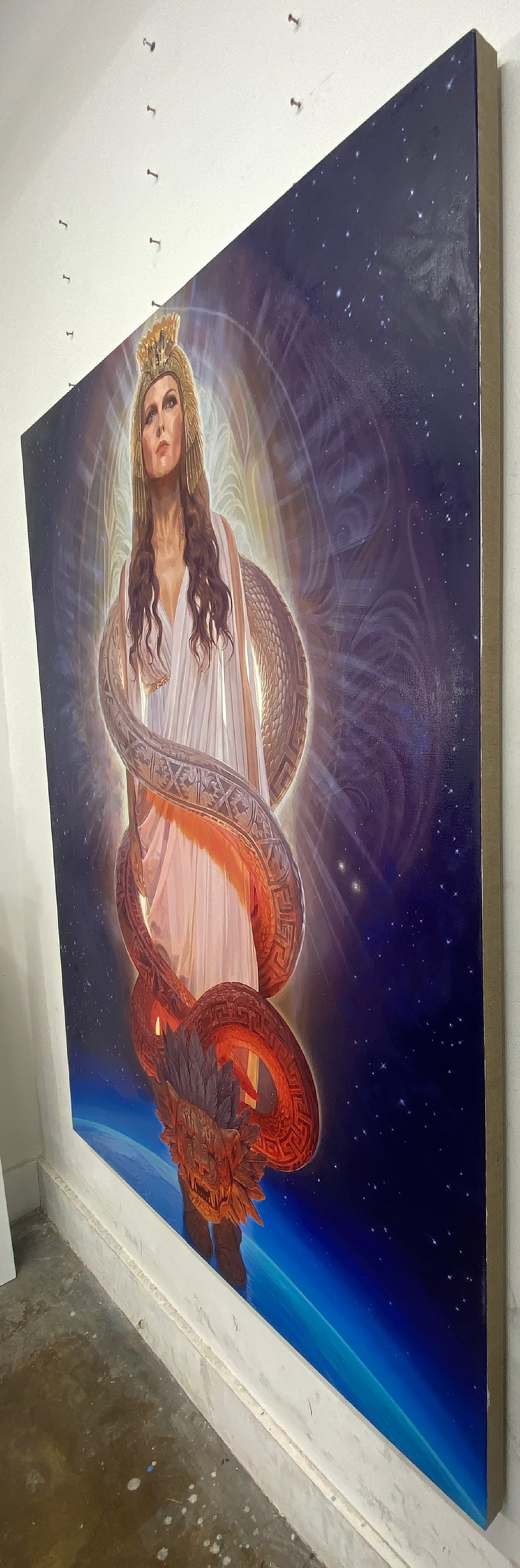
The Shadow of Wisdom - Sophia's Fall and the Conception of Yaldabaoth
Oil on Linen.
120cm by 160cm by 4cm
2026
The Shadow of Wisdom: Sophia’s Fall draws upon the cosmology of The Apocryphon of John, in which Sophia, an aeon of the divine Pleroma the realm of fullness, light, and divine unity becomes the source of a profound cosmic rupture. Sophia, identified with Wisdom, acts without the consent of the Invisible Spirit and without her consort. Driven by an impulse to create from herself, she brings forth a being unlike the divine forms of the Pleroma. The result is Yaldabaoth, a malformed and ignorant power described as having the face of a lion and the body of a serpent. Sophia, recognising what her solitary act has produced, casts him beyond the divine realm and conceals him within a luminous cloud.
It is this moment of rupture that lies at the centre of the painting. Sophia's fall is not simply a descent from heaven, nor is it a conventional story of sin and punishment. It is a movement from fullness into deficiency from a realm in which everything exists in divine relation into a lower reality born from separation, ignorance, and incomplete knowledge. Yaldabaoth, possessing a portion of Sophia's light while remaining ignorant of its source, becomes the arrogant ruler of the lower cosmos and creates a world that imitates, but cannot reproduce, the perfection of the Pleroma.
I see Sophia's fall as an image of consciousness becoming divided from its own origin. Wisdom generates its opposite: ignorance. Light becomes shadow. Creation becomes alienation. Yet the story does not end in catastrophe. Sophia recognises her error, mourns, and repents. Her cry is heard throughout the Pleroma, and she is restored not immediately to her original realm, but to a position above her son, awaiting the completion of her restoration. The painting therefore inhabits the space between fall and return. Sophia is both the wounded source of the shadow and the bearer of the light that survives within it. Her descent becomes a metaphor for the human experience of separation: the feeling that something luminous has been lost, while simultaneously sensing that it remains hidden within us.
The Shadow of Wisdom: Sophia’s Fall is ultimately an image of rupture, remembrance, and the possibility of return the shadow cast by wisdom as it falls from fullness into the unknown.
World wide shipping costs are calculated as 5% on top of the items final sale price.